
Last updated October 16, 2026
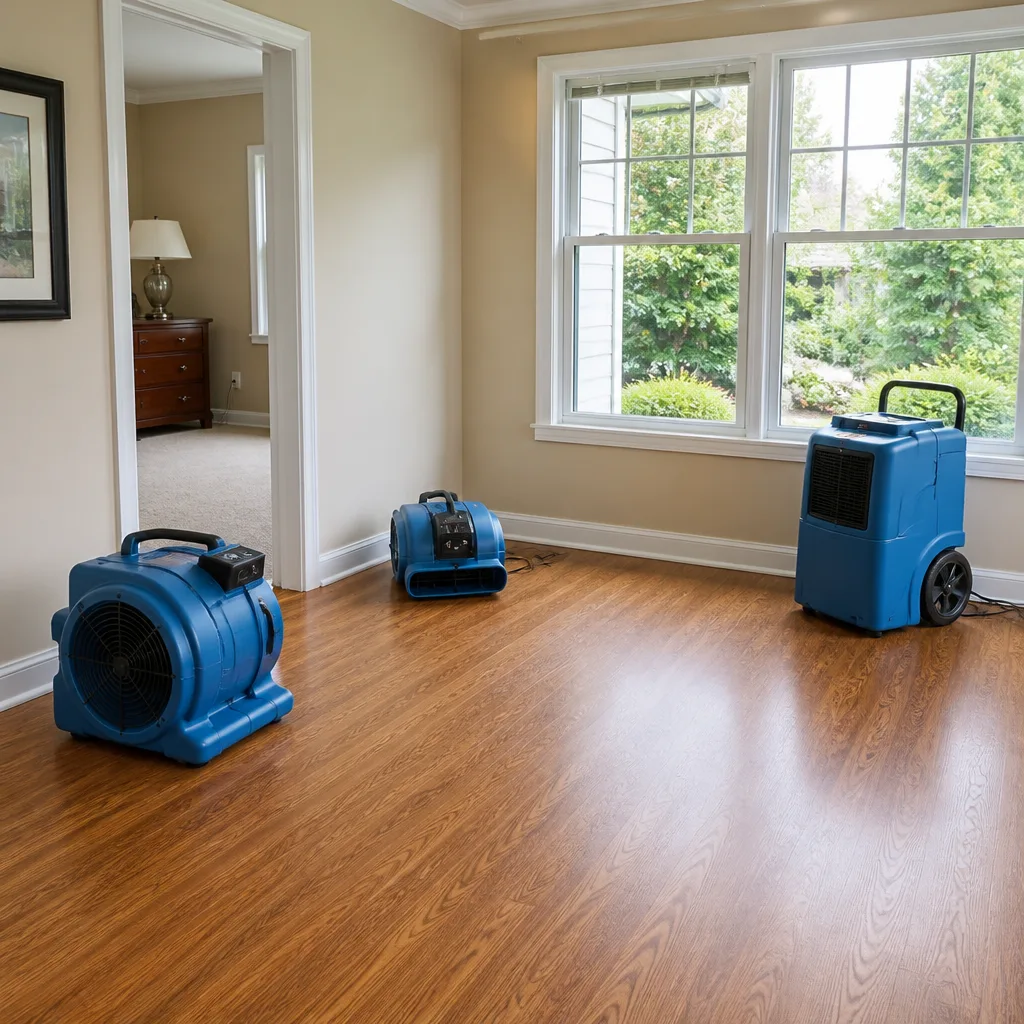 Water damage drying
 Fire & smoke cleanup
 Mold remediation
 Storm response
 Sewage cleanup
 Reconstruction
Free visual inspection and a written scope of work before any mitigation begins - photos, moisture readings, and drying logs go in your claim file
The scope we write is the scope we bill. Anything new gets shown to you, in writing, before we touch it.
Get your free estimateDIY vs Professional Damage Restoration: The Fort Worth Homeowner’s Decision Guide
A Fort Worth homeowner who dries a 40-square-foot laundry room leak with fans from Home Depot and calls it done may have just created an uninsurable mold condition. What looks dry on the surface can read 28% moisture content inside the wall cavity, and that hidden moisture is exactly where mold colonies take hold. This guide walks through the real threshold between what you can safely handle yourself and what requires a professional restoration crew, using the same standards insurance adjusters and certified restorers apply in Fort Worth every day.
Quick Answer
DIY drying is appropriate only for clean-water spills under roughly 10 square feet where no structural material absorbed moisture; anything larger, any gray or black water, or any water that touched drywall, baseboards, subfloor, or wall cavities needs professional restoration. In Fort Worth’s clay-heavy soils and humid shoulder seasons, a surface-dry wall can hold enough internal moisture to grow mold within 72 hours. If you’re unsure, the smartest move is a professional moisture assessment before you spend money on rental fans that won’t solve the real problem.
Restoration work we handle
Table of Contents
- The Real Threshold: What IICRC S500 Says About DIY vs Professional
- Why Consumer Fans and Dehumidifiers Fail at Structural Drying
- The Insurance Documentation Problem With DIY Restoration
- What You Can Actually DIY in Fort Worth: The Short List
- The Hidden Cost of Failed DIY Drying
- Fort Worth-Specific Factors That Change the DIY Equation
- How Professionals Actually Dry a Structure: The Process Explained
- Making the Call: A Decision Framework
The Real Threshold: What IICRC S500 Says About DIY vs Professional
The professional restoration industry operates under a published standard called IICRC S500, which is the reference document for water damage restoration. It doesn’t use dollar amounts to separate DIY from professional work. It uses three factors: the Category of water, the affected square footage, and whether structural materials absorbed moisture. Understanding these three factors is how you make a sound decision instead of a guess.
Water Category is the first and most important variable. Category 1 is clean water from a supply line, faucet, or rainwater that hasn’t touched anything dirty. Category 2 is gray water, what the standard calls “significantly contaminated” water from washing machine overflows, dishwasher discharge, or clean water that sat for more than 48 hours. Category 3 is black water, which includes sewage, floodwater from the Trinity River, or any water that has come into contact with fecal matter or pathogens. A homeowner with proper PPE and genuine diligence can sometimes manage a small Category 1 event. Category 2 and Category 3 water should always be handled by a certified restorer, no exceptions.
Affected square footage matters because drying science changes with scale. A spill under 10 square feet that sits on tile or sealed concrete hasn’t penetrated anything structural. A leak that ran across a carpeted hallway and under a baseboard has, and that’s a different situation. Once water travels, it wicks into drywall, under vinyl plank, and into wall cavities. There is no consumer-grade solution for extracting water from inside a wall assembly.
Structural absorption is the third factor, and it’s the one homeowners most often get wrong. Drywall, OSB subfloor, and baseboard trim are all hygroscopic, which means they pull moisture inward and hold it. A dry surface tells you nothing about what’s happening 3/4 inch inside the material. If you can see a water line on a baseboard or feel coolness on drywall that looks dry, the material has absorbed water and needs professional attention.
Why Consumer Fans and Dehumidifiers Fail at Structural Drying
Professional restoration uses a practice called psychrometric drying, which is the science of tracking the air’s moisture level so we know when your home is truly dry, not just surface-dry. The equipment isn’t just bigger versions of what you can rent. It’s built to achieve specific air movement and humidity ratios that consumer gear physically cannot reach, and those ratios are what prevent mold growth inside wall assemblies after a water event.
A box fan from a hardware store moves air at roughly 1,500 to 2,500 cubic feet per minute. A professional air mover from Phoenix or Dri-Eaz moves 3,500 to 5,000 CFM and focuses that airflow into specific patterns across wet surfaces. That velocity difference determines whether moisture leaves a wall cavity in three days or in ten, and after 72 hours the mold clock has already started. A consumer dehumidifier pulls maybe 30 to 50 pints of water per day. A professional low-grain refrigerant dehumidifier pulls 130 to 180 pints and can target specific humidity levels in the air itself.
There’s also the matter of monitoring. A professional crew doesn’t just set equipment and walk away. We take daily moisture readings from the affected materials using penetrating and non-penetrating moisture meters, and we track the drying curve until materials reach their established dry standard for Fort Worth’s climate conditions. Without those readings, you are guessing. Guessing is exactly how a wall that feels dry on the outside keeps 28% moisture content inside it for six months until the first black spot appears on the baseboard.
The Insurance Documentation Problem With DIY Restoration
Insurance policies are contracts, and contracts run on documentation. Most homeowner policies contain language requiring the policyholder to mitigate damages and, in many cases, to use reasonable professional assistance for structural drying. When a homeowner dries a loss themselves and the claim later involves structural repair, the adjuster will ask for proof that professional-standard drying was performed: extraction logs, daily moisture readings, drying chamber records, and final dry standard documentation. A homeowner-managed cleanup cannot produce any of that.
The documentation gap is where claims get reduced or denied. The adjuster isn’t accusing you of anything personal; they’re applying the policy language. If the policy says structural drying must be performed to IICRC standards and you can’t show that it was, the carrier has a contractual basis to exclude the resulting mold remediation or structural replacement from your claim. We’ve seen this happen in Fort Worth more times than homeowners expect. The insurance company’s position is straightforward: they will pay for what a professional did, documented properly. They are less eager to pay for what a homeowner did, documented nowhere.
Photo documentation matters throughout this process. If you do attempt a small DIY job, photograph everything before, during, and after. But understand that photos of a wet carpet with a fan on it are not the same as a professional moisture log, and adjusters know the difference.
What You Can Actually DIY in Fort Worth: The Short List
Not everything needs a professional truck and a four-person crew. There are specific jobs in Fort Worth where a homeowner can genuinely handle the cleanup, and being honest about what those are will save you from spending money on a service call you didn’t need-our Water Damage Restoration Maintenance Checklist for Fort Worth Homeowners covers what to watch for. Here is the realistic DIY list:
- Surface-only wet carpet from a contained clean-water spill under 10 square feet. If a cup of water spills on a tile floor or a small pet accident hits carpet that you catch immediately, a towel and a fan are fine. The key word is “contained.” The water did not run anywhere, sit long enough to penetrate a pad, or touch a wall.
- Drying out a garage floor after a garden hose incident. A concrete slab that gets wet from a hose or a car that dripped rainwater is a simple evaporation situation. Concrete is not a food source for mold the way drywall paper is, and a shop fan will handle the residual moisture on the surface.
- Cleaning gutters and downspouts to prevent future water intrusion. This is prevention, not restoration. Fort Worth’s storm season is real, and a clogged gutter against the fascia is how water finds its way down an exterior wall and into a wall cavity. Keeping gutters clear is a genuinely valuable DIY task that reduces your chance of ever needing a professional water job.
- Wiping down and airing out a small, isolated condensation event. A window AC unit that dripped onto a vinyl floor, or condensation on a single window sill that you noticed the same day, is manageable. Again: surface only, small, clean water, no structural contact.
Everything beyond this list involves a material that absorbed water, a Category that changed, or a space you can’t see into. The Fort Worth homes built in the 1970s through 1990s, common across Wedgwood, Ridglea, and Meadowbrook, often have gypsum board walls with paper facing. That paper is mold’s favorite meal once it gets damp and stays damp.
The Hidden Cost of Failed DIY Drying
Here’s the math that nobody wants to be the one to explain six months after the event. Professional water extraction and drying on a moderate residential loss in Fort Worth typically runs between $1,800 and $4,500 depending on the affected square footage and what got wet. Remediation of a mold colony that established because drying was incomplete typically costs three to five times that amount, and the follow-up job is often not covered by insurance because the carrier will determine that the mold growth resulted from improper mitigation by the policyholder.
A $2,200 professional dry becomes a $6,600 to $11,000 mold remediation, paid out of pocket. That’s the hidden cost of the DIY attempt that felt like it worked. The $200 in rental fans that looked like the frugal choice becomes the most expensive decision in the whole process.
Beyond money, there’s the time cost. A mold remediation involves containment, air scrubbers, removal of affected drywall and insulation, antimicrobial treatment, and reconstruction of whatever was removed. It’s a week to two weeks of work in your home versus a three to four day professional drying job. The disruption alone is reason enough to get the drying right the first time.
Fort Worth-Specific Factors That Change the DIY Equation
Fort Worth is not Houston, and it’s not Phoenix. The drying math changes based on where you live, and Fort Worth has a few specific factors-detailed in our Seasonal Damage Restoration Care for Fort Worth: Year-Round Homeowner’s Guide-that make DIY drying riskier here than in some other markets.
First, the clay soil. Fort Worth sits on expansive clay that shrinks and swells with moisture changes. When a slab leak or a supply line break dumps water under a slab or against a foundation, that clay expands and can cause slab movement. A DIY fan on the floor doesn’t address water that has moved through a foundation crack or under a mud sill. The visible water is only part of the problem, and in Fort Worth the invisible part is literally moving the ground under your house.
Second, the shoulder season humidity. Spring and fall in Fort Worth bring periods of 60 to 75 percent outdoor relative humidity. When the outdoor air is already carrying that much moisture, a box fan pulling that air across a wet wall isn’t doing much drying at all. Professional drying in high-humidity conditions uses closed drying systems and desiccant dehumidifiers that don’t rely on the outside air to be dry. Your Home Depot fan doesn’t have that option.
Third, the housing stock. Fort Worth has a mix of pier-and-beam foundations in older neighborhoods like Fairmount and Ryan Place, and slab foundations in newer developments. Pier-and-beam homes have crawl spaces that hold moisture and slow drying from below. A water event in a pier-and-beam home can wet the subfloor, the joists, and the crawl space simultaneously, none of which a surface-level DIY effort will touch. A professional crew sends someone under the house to confirm what’s damp and how far it traveled.
How Professionals Actually Dry a Structure: The Process Explained
Understanding what a professional crew actually does helps you see where the money goes and why the result is different. Here is the full sequence as it typically runs in the field, following the standards set by the RIA and IFA alongside IICRC protocols:
- Assessment and Category determination. A technician documents the water Category, the affected materials, and the square footage. This is when we determine whether the event is clean, gray, or black water, and which materials need to be removed versus dried in place.
- Water extraction. Standing water is removed using truck-mounted or portable extraction equipment. On a carpeted loss, a professional extractor pulls water from the carpet and pad that a wet vacuum cannot touch.
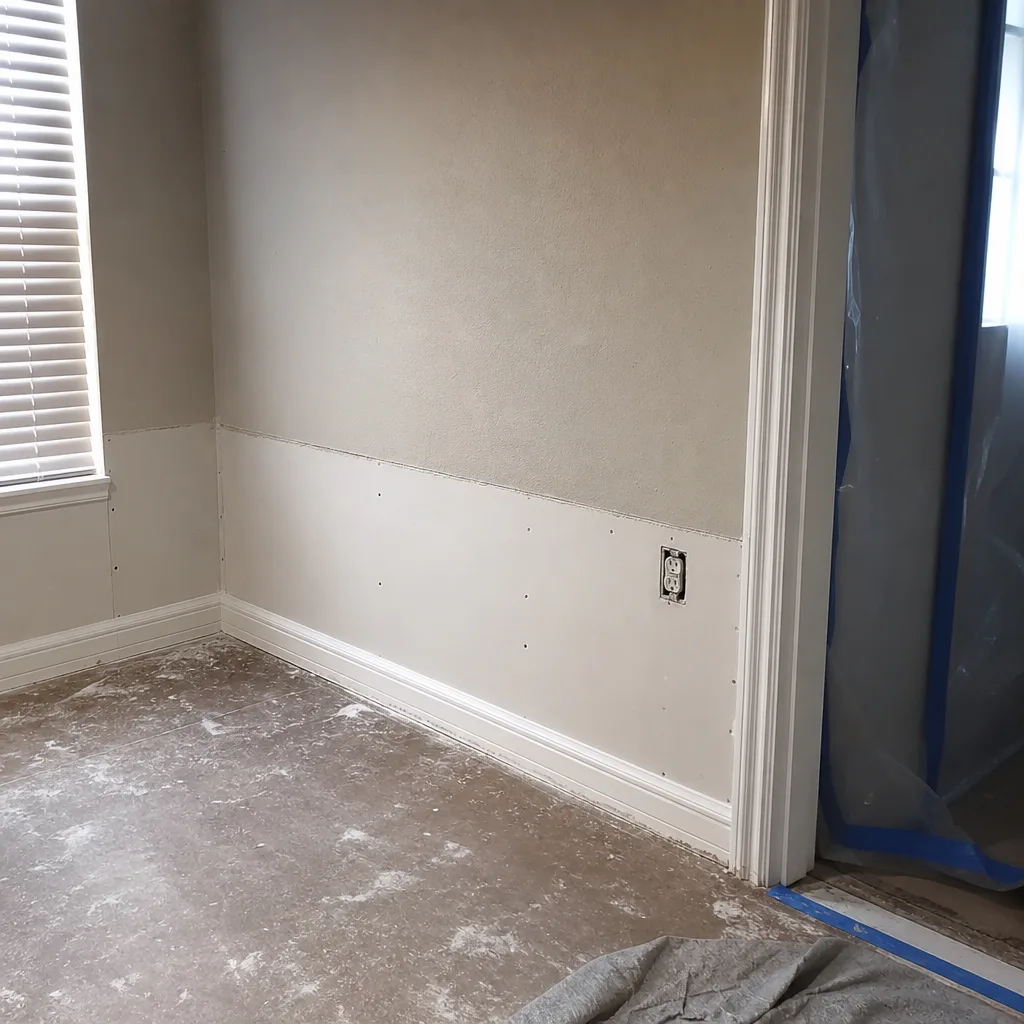
- Controlled demolition as needed. Baseboards, wet drywall, and saturated carpet pad are removed to expose wall cavities and subfloor. Anything that cannot be dried to standard within the mold window gets removed now, before it becomes a bigger problem.
- Equipment placement. Air movers from Dri-Eaz and Phoenix are positioned to create specific airflow patterns, and dehumidifiers are sized to the affected cubic footage. The equipment is calculated, not guessed at.
- Daily monitoring. Moisture readings are taken daily from the affected materials, and the drying plan is adjusted based on what those readings show. This is the step that separates professional drying from blowing air at a wet spot.
- Final dry standard confirmation. When materials reach their dry standard, the equipment comes out, and the job is documented with before, during, and after moisture readings. That documentation is what your insurance company accepts and what proves the home was actually dried.
The whole process on a typical Fort Worth residential job takes three to five days. The cost is lower than almost any alternative that goes wrong, and the documentation is worth as much as the drying itself when it comes to your claim.
Making the Call: A Decision Framework
When water hits your floor at midnight, you don’t have time for a seminar. Here is the decision tree we use when homeowners ask us whether they need to call someone or can handle it themselves:
- What is the water source? If it came from a supply line, a faucet, rainwater, or condensation, it’s potentially clean water. If it came from a drain, a toilet that overflowed, a dishwasher, a washing machine, or the ground outside during a flood, it’s gray or black water and you should call a professional immediately.
- How big is the affected area? Under roughly 10 square feet and on the surface only, you can consider DIY. Larger than that, or if water traveled under a baseboard, under a cabinet, into a wall, or under flooring, call a professional.
- What did the water touch? Tile and sealed concrete can air dry. Carpet pad, drywall, baseboard, cabinetry, subfloor, and insulation absorbed water and need professional drying or removal.
- How long has it been wet? If you caught it within the hour, your DIY window is wider. If water sat overnight or longer, the mold clock is already running and professional attention is the conservative call.
- Will you be filing an insurance claim? If yes, professional restoration with proper documentation is the choice that protects your claim. If no and the event meets every DIY criterion, a careful homeowner-managed response is reasonable.
Common Mistakes to Avoid
- Waiting to see if it dries on its own. Indoor materials don’t self-dry in Fort Worth’s humidity. Every hour you wait is an hour of moisture wicking deeper into wall cavities and subfloor.
- Using a household vacuum to extract water. Shop vacs are not extraction equipment. They remove a fraction of the water that professional extraction pulls from carpet and pad, and the water left behind is where the damage continues.
- Relying on a single moisture reading. A damp meter from a hardware store tells you the surface is wet. It does not tell you whether the wall cavity behind that surface is at 23% or 13% moisture content. One reading on day one doesn’t prove anything on day four.
- Removing drywall yourself before documenting the damage. If you plan to file an insurance claim, don’t tear out materials before the damage is documented. You can accidentally remove evidence the adjuster needs to approve your claim.
- Painting over a water-stained ceiling or wall. Paint seals moisture inside the material. A ceiling that dried on the surface but is still wet inside the drywall will bubble, peel, or grow mold behind the paint within months.
- Calling the wrong trade first. A plumber fixes the leak. A restorer dries the structure. If water has spread, you need both, and the order matters: stop the source, then dry the damage. Waiting on the plumber before starting drying usually means three extra days of moisture spreading through your Fort Worth home.
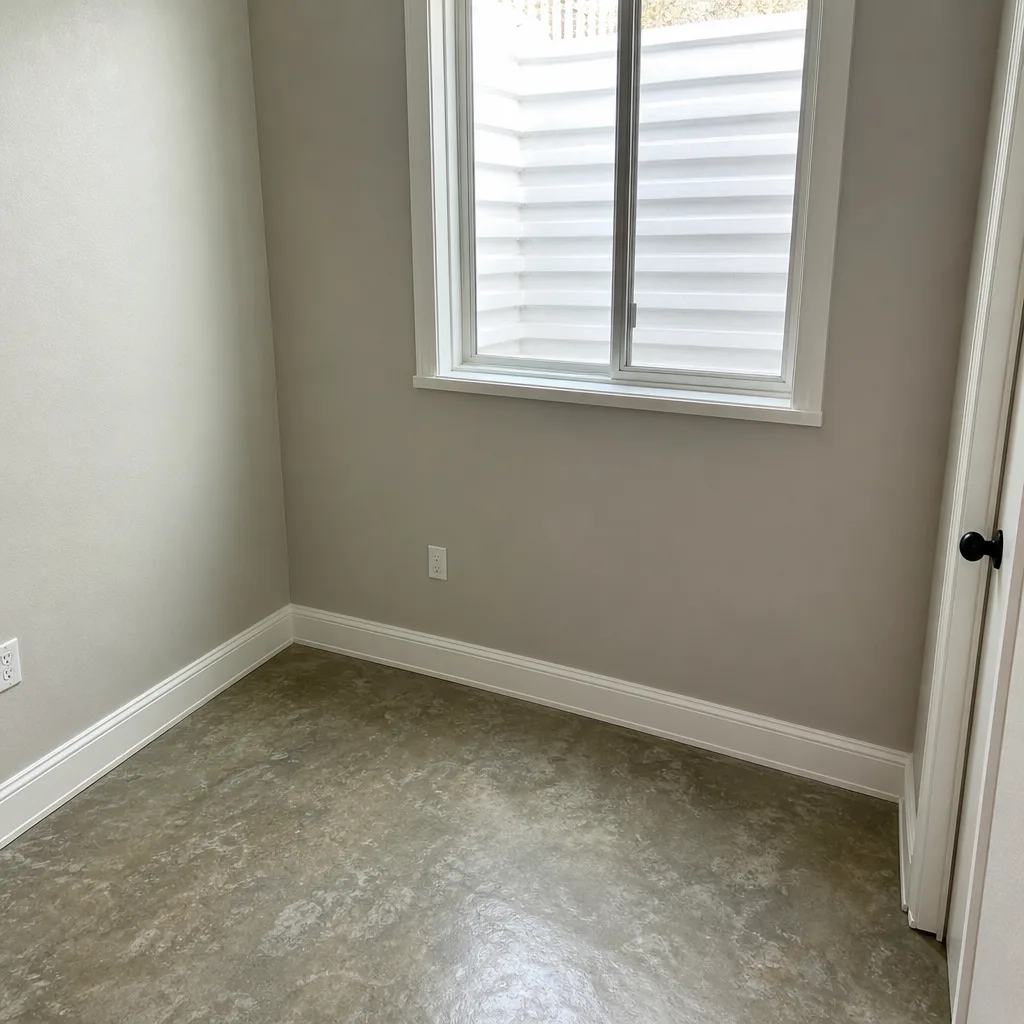
See the difference
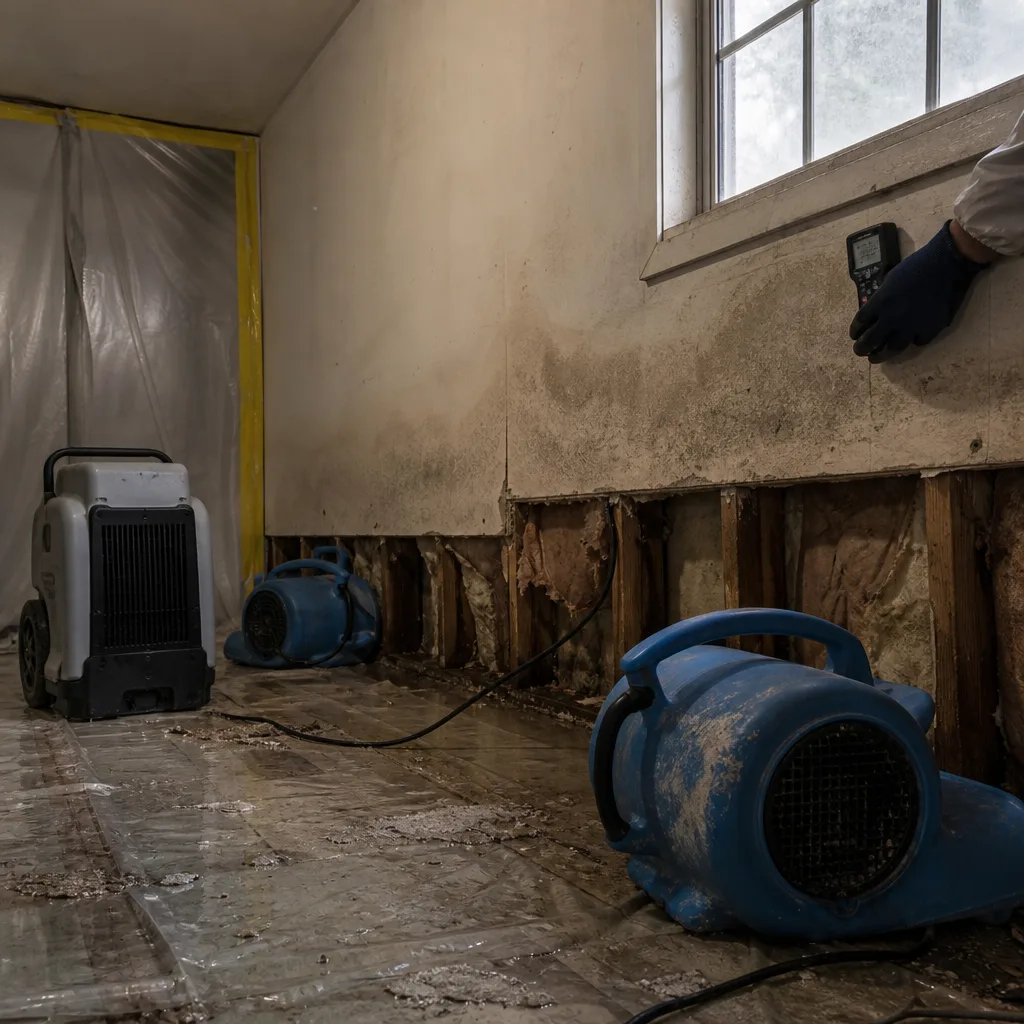 Before
 After
After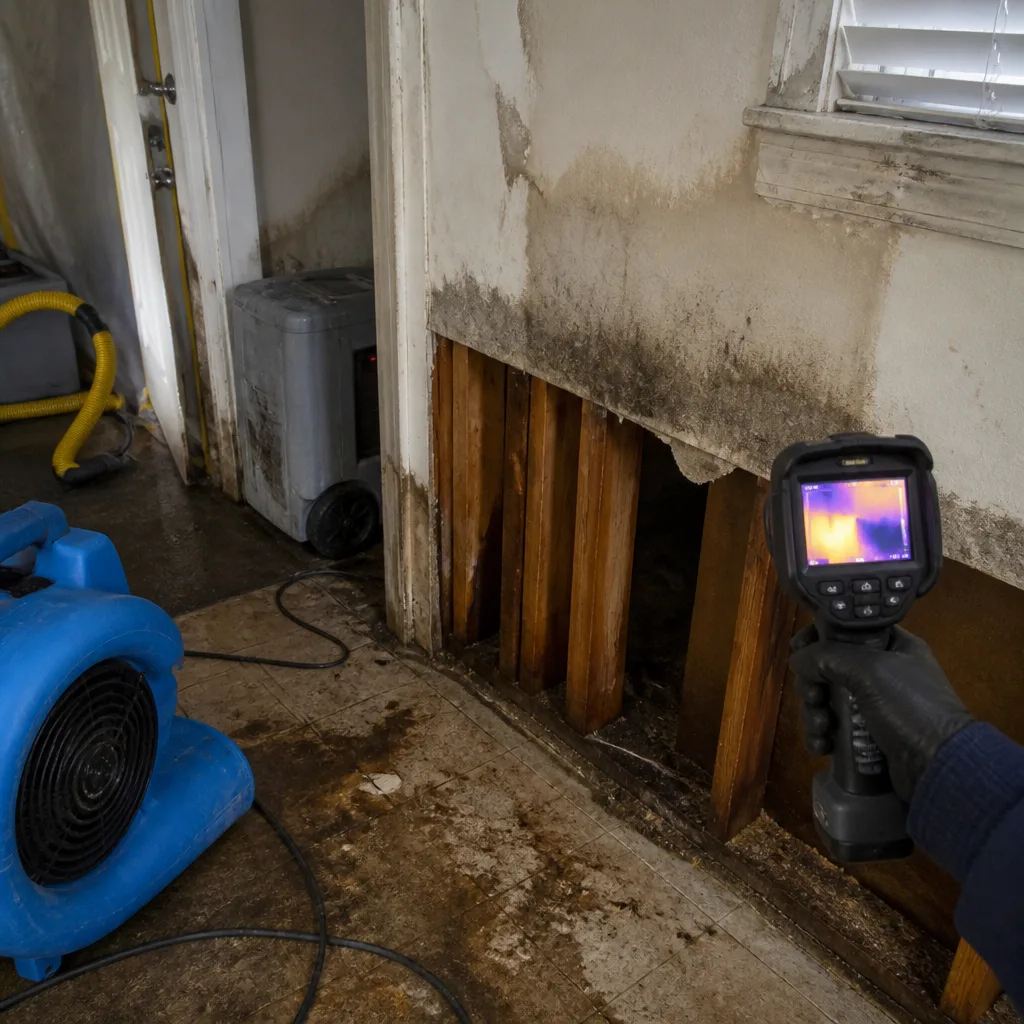 Before
 After
After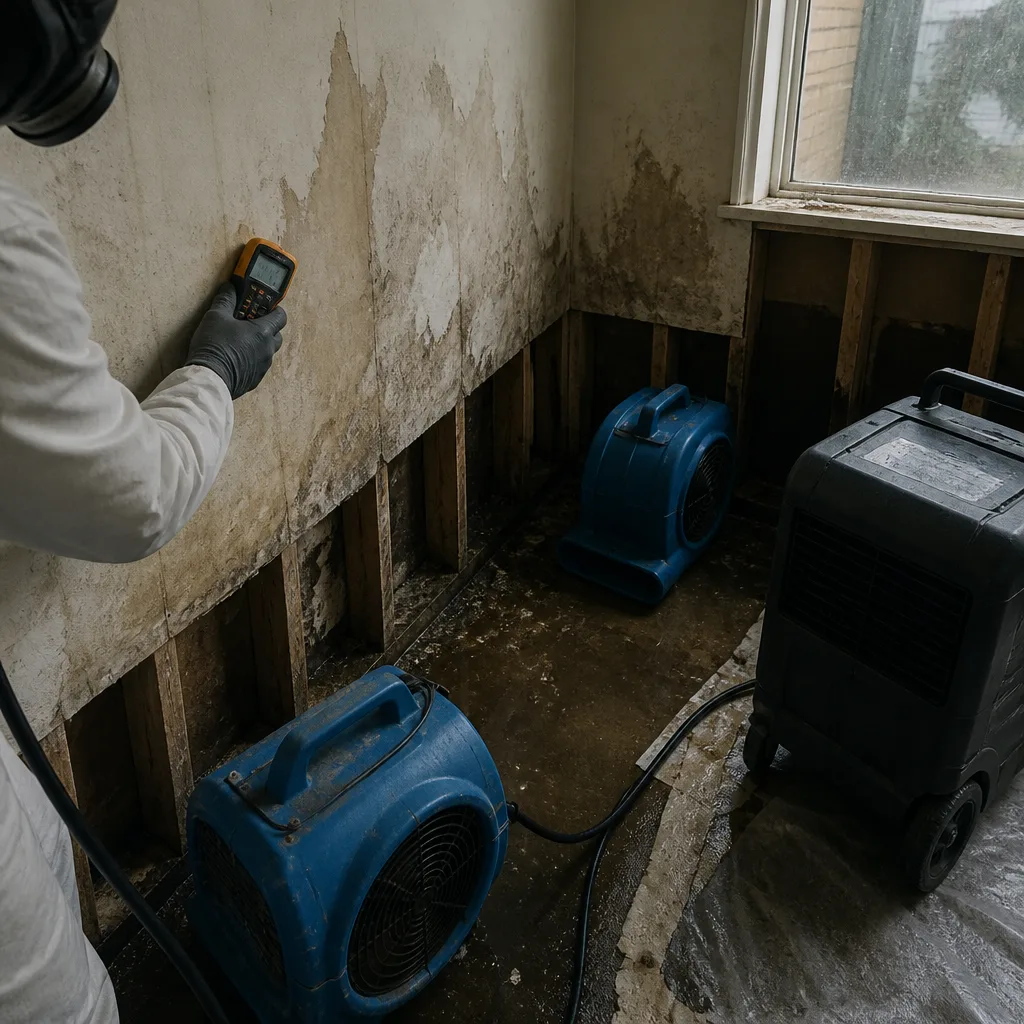 Before
 After
AfterWhen to Call a Professional
Call a professional whenever the water is gray or black, whenever the affected area exceeds roughly 10 square feet, whenever water touched drywall or subfloor, whenever the event happened more than 48 hours ago, or whenever you’re filing an insurance claim. These are the situations where a DIY attempt either cannot achieve a proper dry or actively puts your claim and your home at risk. If you’re anywhere near the line and you’re not sure, a moisture assessment costs less than what a failed dry will cost. Wendell Restoration Fort Worth offers free estimates in Fort Worth. Call (682) 432-0584 and a live person will answer, 24/7, because water doesn’t wait for business hours and neither do we.
Frequently Asked Questions
Professional water damage restoration in Fort Worth typically runs between $1,800 and $4,500 for a moderate residential loss, depending on the affected square footage and which materials got wet. A small extraction-only job on a contained spill can come in lower, and a large loss with multiple affected rooms runs higher. Call (682) 432-0584 for an exact quote, and the price you get is put in writing before any work starts.
Most homeowner policies cover sudden and accidental water damage from things like a burst supply line or an appliance overflow, but coverage almost always depends on professional mitigation performed quickly and documented properly. Your adjuster will expect extraction logs, daily moisture readings, and dry standard documentation, which is what a professional restoration company provides. Water Damage Restoration in Fort Worth includes full photo documentation and direct adjuster coordination on every job.
A professional restoration crew can usually be at your Fort Worth home within hours, not days. Wendell answers every call with a live person around the clock, and a background-checked, uniformed technician arrives with a live arrival time you can track, not a four-hour window. Call (682) 432-0584 for a same-day assessment.
You can, but the risk is that the carpet pad, the subfloor, and the wall cavity below are already growing mold that a new carpet will simply hide. By the time a smell appears, the microbial growth is established, and the remediation now needed is far more expensive than professional drying would have been. The odor you smell is the problem announcing itself.
Yes, mold remediation in Fort Worth typically costs three to five times more than professional water extraction and drying would have cost on the same event, and it often isn’t covered by insurance when the mold resulted from incomplete drying. That’s the hidden cost of a DIY attempt that felt like it worked at the time. Mold Remediation in Fort Worth includes containment, air scrubbing, and antimicrobial treatment to the standards the situation requires.
The 365-Day Done Right Promise is a written guarantee on every Wendell restoration job: if it’s not done right, we make it right, for a full year after the work is completed. If a repair fails within that window, we come back and fix it, and that second visit is free. Every job includes a written price before any work starts and a digital invoice texted to your phone, so the number on the screen is the number you pay. Water Damage Repair in Fort Worth is covered by this guarantee on every job we complete.
The Bottom Line
The DIY versus professional question in damage restoration isn’t about whether you’re capable with a fan and a shop vac. It’s about what you can’t see and what you can’t prove. A surface-dry wall can hide a mold colony that costs five times the original drying to remediate. A homeowner-managed cleanup cannot produce the documentation an insurance adjuster will require. In Fort Worth, where clay soil, shoulder-season humidity, and older housing stock stack the drying math against you, the threshold for professional help is lower than most homeowners expect. If the water was clean, small, and on the surface, you can probably handle it. If it wasn’t, call a professional. Call (682) 432-0584 and you’ll get a live person, a straight answer, and a written price before any work starts.
Written by Blake Sorensen, Owner at Wendell Restoration Fort Worth, serving Fort Worth since 2006. Explore more guides & resources on protecting your home.