
Last updated October 16, 2026
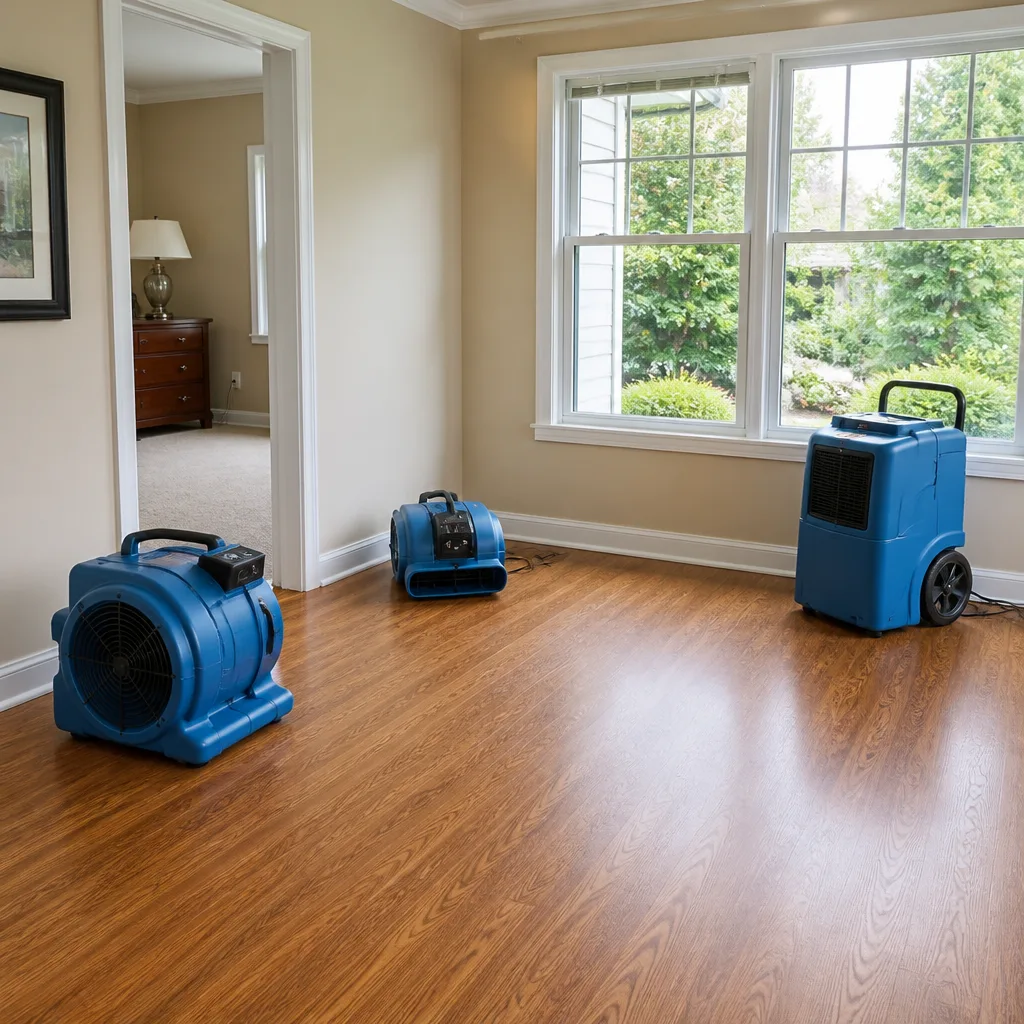 Water damage drying
 Fire & smoke cleanup
 Mold remediation
 Storm response
 Sewage cleanup
 Reconstruction
Free visual inspection and a written scope of work before any mitigation begins - photos, moisture readings, and drying logs go in your claim file
The scope we write is the scope we bill. Anything new gets shown to you, in writing, before we touch it.
Get your free estimateThe Complete Guide to Damage Restoration in Fort Worth
The average Fort Worth household files a water or fire damage claim once every 11 years. That means most homeowners are making a $15,000-plus decision with zero prior experience, a wet floor beneath their feet, and no idea what a legitimate restoration job actually looks like from start to finish. This guide maps every phase of real damage restoration in Fort Worth, from the first moisture reading to the final photo sign-off, so you’ll know what “done” looks like before you ever need it. For warning signs to watch for, see our companion guide. No scare tactics. No vague promises. Just the process, explained plainly.
Quick Answer
Damage restoration in Fort Worth means returning a home to its pre-loss condition after water, fire, mold, or storm damage through a defined sequence: emergency extraction, structural drying, content handling, and rebuild. A legitimate restoration company in Fort Worth will give you a written scope of work and price before any tools touch your home, document every phase with moisture readings and photos, and hand you a completion report proving the structure is dry by measurement, not by touch. For a detailed look at pricing factors, see our Damage Restoration Cost Breakdown: The Fort Worth Homeowner’s Reference for 2026. Expect most water mitigation jobs to run 3 to 7 days and full rebuilds to take weeks, with Fort Worth’s clay soil and high summer humidity being the two biggest local factors that stretch timelines.
Restoration work we handle
Table of Contents
- What Is Damage Restoration, Exactly?
- The Four Phases of Every Restoration Job
- Psychrometric Drying and IICRC Ratings, Explained in Plain English
- Fort Worth Conditions That Change Restoration Timelines
- What a Written Scope of Work Should Contain
- What “Done” Actually Means: Moisture Mapping and Clearance Readings
- Common Mistakes to Avoid
- When to Call a Professional
- Frequently Asked Questions
What Is Damage Restoration, Exactly?
Damage restoration is the process of returning a home to safe, livable condition after water, fire, mold, or storm damage. It is not the same thing as general contracting or emergency cleanup, though those overlap. A restoration company does three things that a general contractor typically does not: it mitigates ongoing damage immediately, it verifies the structure is actually dry or clean using instruments and standards, and it documents everything in a way that insurance adjusters can review without friction.
In Fort Worth specifically, restoration work splits into the three service lines we handle every day on our Wendell Restoration Fort Worth home page: water damage restoration, mold remediation, and water damage repair. Water damage restoration is the emergency side, getting standing water out and hidden moisture under control. Mold remediation is the containment and removal of fungal growth that follows water if it is not handled quickly or thoroughly. Water damage repair is the rebuild side: drywall, flooring, trim, paint, the work that makes the house look like nothing happened.
Most homeowners only interact with this industry once, maybe twice, in their lives. That unfamiliarity is exactly why verbal promises and handshake deals still happen in this trade, and why we insist on putting everything in writing before work begins. You should know what a real restoration sequence looks like so you can tell the difference between a company working to a standard and a crew that just wants to point fans at your wall and leave.
The Four Phases of Every Restoration Job
Every legitimate restoration project, whether it is a burst pipe in Wedgwood or a hail-damaged roof leaking into a Ryan Place attic, moves through four distinct phases. Skipping a phase does not save money. It moves the cost downstream, where it shows up six months later as a warped floor, a musty closet, or a mold bloom behind baseboards.
Phase 1: Emergency Extraction and Containment
- Standing water is removed using truck-mounted or portable extraction units. In Fort Worth slab homes, water can sit under cabinets and vanities, so extraction includes pulling toe-kicks and drilling small relief holes where needed.
- Affected porous materials are identified: carpet pad, drywall, insulation. Materials that cannot be economically dried are cut out and bagged for disposal.
- Excess moisture is contained to prevent cross-contamination. In mold jobs this means physical containment barriers and negative air pressure. In water jobs it means sealing off the wet zone from unaffected rooms.
- Initial moisture readings are taken and logged. These baseline readings are what the entire drying plan is built around. Without them, no one can prove progress.
Phase 2: Structural Drying
This is the phase most people associate with restoration: air movers and dehumidifiers running for days. The equipment is placed according to a drying plan calculated from the baseline readings, the size of the wet area, and the materials involved. In our experience, Fort Worth homes with slab foundations often need additional drying time under the slab side of walls, where clay soil holds moisture against the concrete and slows evaporation. We use professional-grade equipment from Dri-Eaz and Phoenix on every job, because consumer fans from a hardware store do not move air at the volume or pressure required to pull moisture from drywall cavities and subfloor.
Phase 3: Content Pack-Out and Cleaning
Furniture, clothing, rugs, and personal items are moved to a dry area, or packed out entirely if the job is large or the contents need specialized cleaning. Items are documented with photos, inventoried, and either restored on site or shipped to a content cleaning facility. This phase is where a lot of companies cut corners, treating contents as an afterthought. A homeowner who discovers six months later that a dining room table is splitting from trapped moisture has a legitimate grievance that should have been prevented at this stage.
Phase 4: Repair and Rebuild
The final phase is reconstruction: replacing drywall, flooring, trim, paint, and any structural elements removed during mitigation. This is not same-day work. Rebuild is scoped, scheduled, and priced in writing like any remodel, because that is what it is. The difference is that restoration rebuilds are often partially or fully covered by insurance, which means the documentation from Phases 1 through 3 matters. Our Damage Restoration Permits, Codes & Inspections in TX: What You Need to Know explains the regulatory side of rebuilds. Good documentation makes the claim straightforward. Sloppy documentation makes it a fight.
Psychrometric Drying and IICRC Ratings, Explained in Plain English
Ask a restoration company how they know your walls are dry, and a legitimate answer should involve the word psychrometric and a standard like IICRC. If you get a shrug or “they feel dry to me,” that is a red flag the size of a Texas thunderhead.
Psychrometric drying is the science of managing air conditions so that moisture in building materials evaporates at the right rate. It means tracking temperature, relative humidity, and the moisture content of materials so we know when your home is truly dry, not just surface-dry. The goal is equilibrium: bringing the affected materials back to a moisture level that matches the surrounding dry structure. Drying too fast can warp wood and crack drywall. Drying too slow lets mold establish. The psychrometric data tells us where we are on that curve daily.
The IICRC is the Institute of Inspection, Cleaning and Restoration Certification, the body that sets the standards most insurance companies reference. Within the IICRC S500 standard for water damage, every job gets two ratings:
- Class (1 through 4) describes how much of the structure is wet and how fast it will dry. A Class 1 job is a small area with minimal absorption. A Class 4 job means water has saturated materials that hold moisture tightly, like hardwood, plaster, and concrete.
- Category (1 through 3) describes the water source. Category 1 is clean water from a supply line or tub overflow. Category 2 is gray water with some contamination, like a washing machine discharge. Category 3 is black water with sewage, floodwater, or anything carrying pathogens. Category 3 jobs require more aggressive containment, more material removal, and different antimicrobial treatments.
In Fort Worth, we routinely see Category 3 situations after heavy storms push creeks out of banks in older neighborhoods near the Trinity, and Class 4 situations in slab homes where water has traveled under vinyl plank through wall plates. A company that cannot tell you the Class and Category of your job is not working to a standard. They are guessing.
Fort Worth Conditions That Change Restoration Timelines
Restoration timelines vary by geography, and Fort Worth has three specific conditions that homeowners should understand because they directly affect how long a job takes and how likely it is to succeed.
Clay soil that holds moisture under slabs. Most of Fort Worth sits on expansive clay soil, the same soil that causes foundation issues across the Metroplex. After a plumbing leak under a slab, that clay holds moisture against the concrete for weeks. Surface drying happens quickly, but moisture readings under flooring and behind baseboards can stay elevated long after the visible water is gone. A drying plan in Fort Worth has to account for this, or the job ends while the slab is still bleeding moisture upward into flooring and drywall.
High summer humidity that slows evaporation. From June through September, Fort Worth’s outdoor humidity routinely tops 70 percent. Evaporation slows when the surrounding air is already saturated. Dehumidifiers have to work harder, drying chambers take longer to reach target conditions, and jobs that would take three days in a dry Colorado climate can take five or six days here. This is a physical reality, not an upsell opportunity, and any honest restoration company will tell you the same.
Hailstorm-driven roof leaks that go undetected. Fort Worth sits in the heart of hail alley. Spring hailstorms dent roofs and crack shingles, and the resulting leaks often do not show up for weeks or months, when the next heavy rain pushes water through the weakened decking into attics and down inside walls. By the time a homeowner sees a ceiling stain in a home near TCU or in the North Side, the water may have been traveling through the wall cavity for days. Restoration on these jobs almost always involves more demolition than a straightforward plumbing leak, because the intrusion point is harder to isolate and the damage is more spread out.
None of these conditions are reasons to panic. They are reasons to work with a company that understands Fort Worth specifically, not one that applies a one-size-fits-all drying formula from another climate.
What a Written Scope of Work Should Contain
A verbal estimate is a red flag, full stop. In a damage situation, the scope of work changes as materials are removed and hidden damage is exposed. Without a written starting point, you have no way to hold anyone accountable for what was promised. Here is what a legitimate written scope of work should contain:
- A line-item list of work to be performed. Not “dry the kitchen,” but “extract standing water from 240 sq ft kitchen and adjacent hallway; remove and dispose of 42 lineal feet of baseboard; cut drywall 24 inches above water line across 16 lineal feet of wall.”
- Equipment to be deployed. How many air movers, how many dehumidifiers, what brand and capacity. If a company will not tell you how many pieces of equipment they are setting, they are not planning a job, they are improvising one.
- A price in writing. The full estimate should be documented, and any changes should come as written addendums, not surprise line items on the final invoice. We give every homeowner in Fort Worth a written price before any work starts, and the digital invoice is texted so the number on the screen is the number you pay.
- Target dry times and daily monitoring schedule. A real drying plan includes expected dry days and a commitment to return daily for moisture readings. It is a plan, not a guess.
- What the warranty covers, in writing. Every repair we complete includes our 365-Day Done Right Promise: if it’s not done right, we make it right. That is stated in writing on every job, not mentioned casually by a technician.
As a benchmark, The Relay Standard is what we hold every job to at Water Damage Restoration in Fort Worth: book in a tap, live arrival time, photo updates by text, price in writing, and a text invoice. You should expect similar documentation from any company you hire, whether or not it carries that name.
What “Done” Actually Means: Moisture Mapping and Clearance Readings
The most persistent myth in damage restoration is that a job is done when surfaces feel dry. Touch is not a measurement. A wall can feel bone-dry to your hand while the cavity behind it holds 25 percent moisture content, which is more than enough to feed mold in a Fort Worth summer.
Moisture mapping is the process of taking baseline readings throughout the affected area, and then re-taking those same readings daily during drying. We use penetrating and non-penetrating moisture meters, thermal imaging cameras, and humidity sensors. Each reading is logged against the initial baseline. The drying plan is adjusted based on what the data shows, not on what the air “feels like” when you walk in.
Clearance readings are the final moisture measurements that prove the structure has reached its drying goal. For water damage, the goal is typically to return affected materials to within a few percentage points of the moisture content of unaffected materials in the same home. For mold remediation, clearance means both visual inspection and air or surface sampling that shows spore counts have returned to normal background levels for the area.
A legitimate completion report should contain: the initial moisture map, the daily reading log, the final clearance readings, photos of the work before and after, and a written statement of what was dried, what was removed, and what was rebuilt. If a company cannot produce these, they are not finished, regardless of how the floor feels.
The same documentation discipline applies to our Mold Remediation in Fort Worth work, where clearance testing is a non-negotiable part of the job. Mold that is killed but left in place is a future problem. Remediation means removal, containment, and verification, not just spraying the wall and calling it good.
See the difference
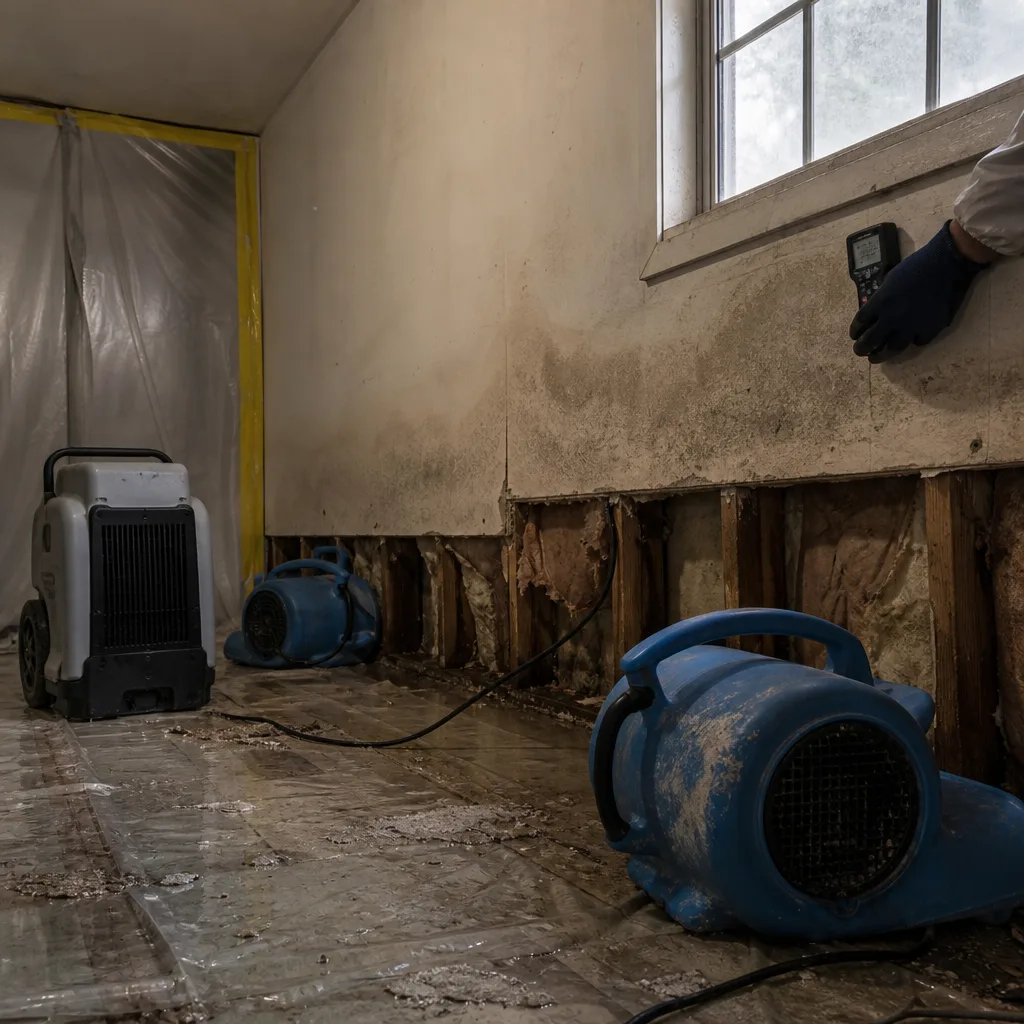 Before
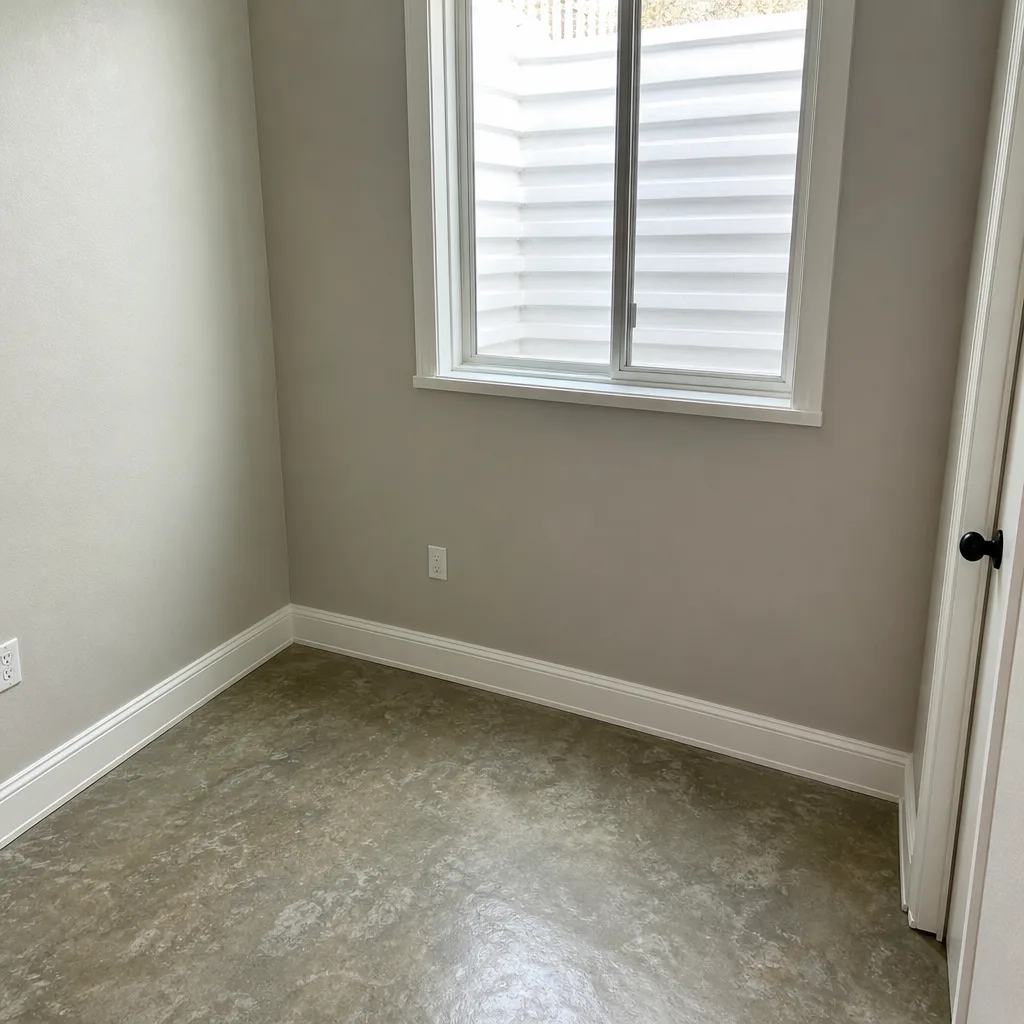 After
After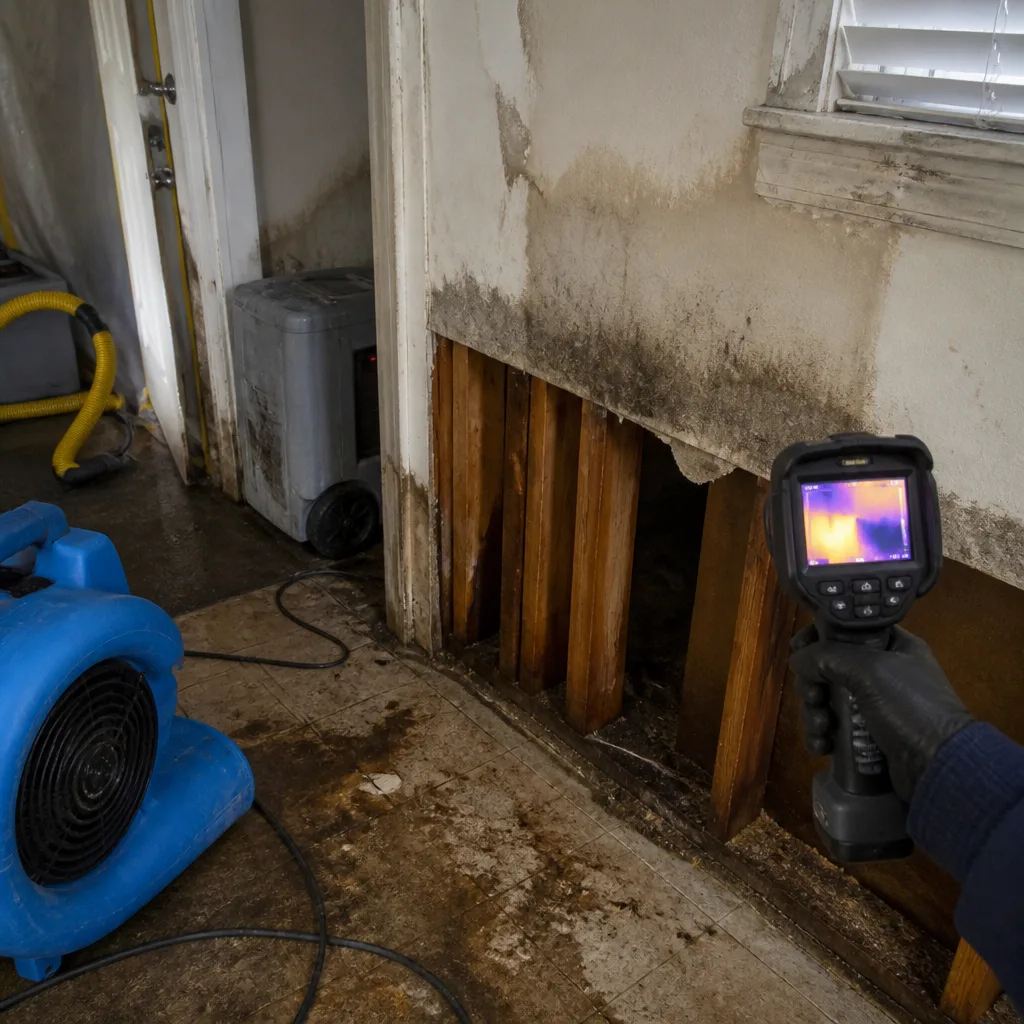 Before
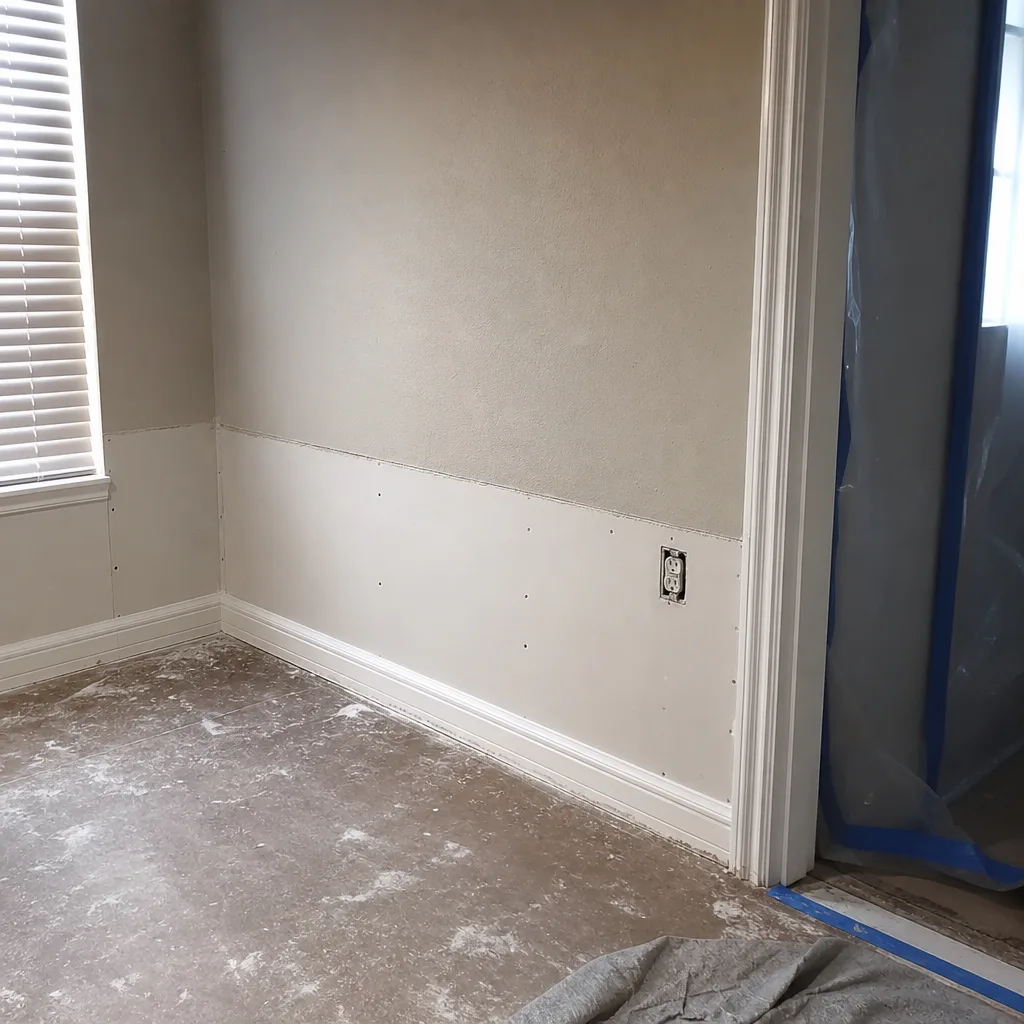 After
After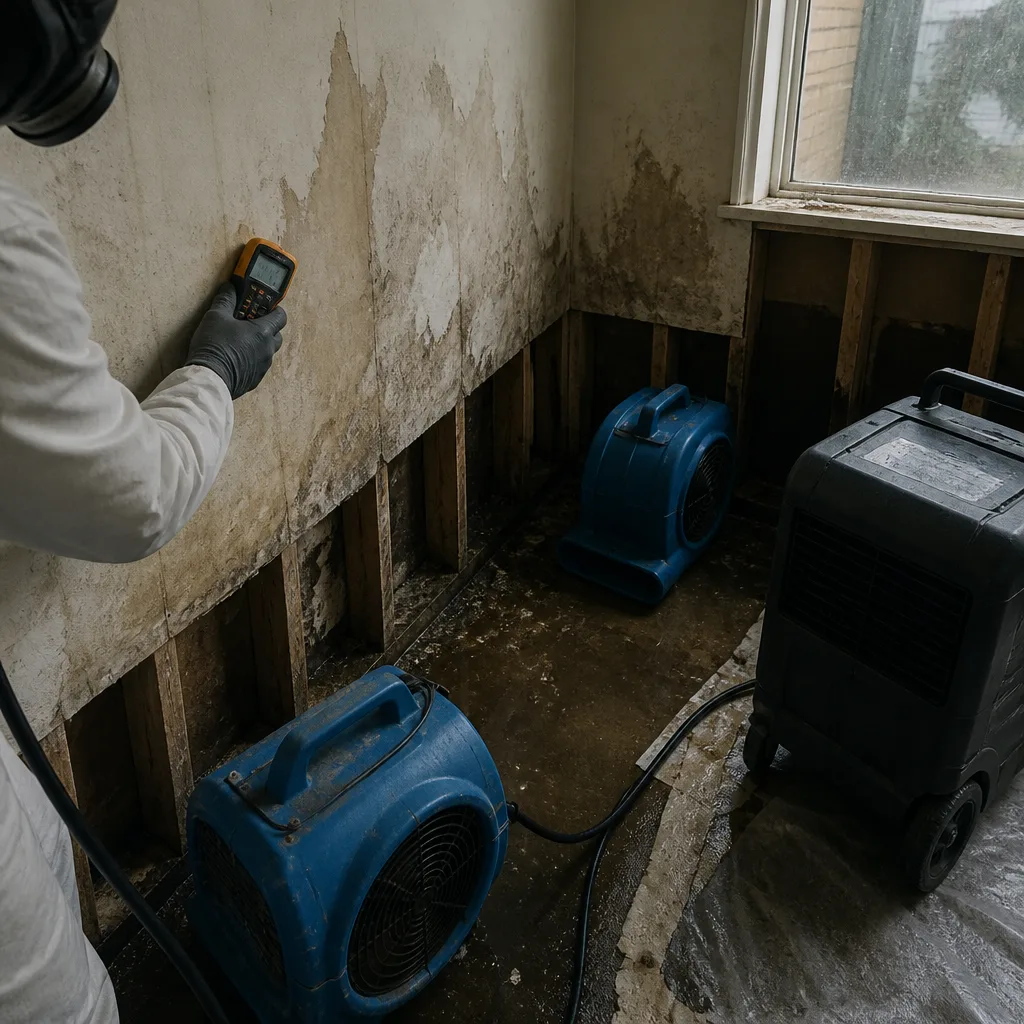 Before
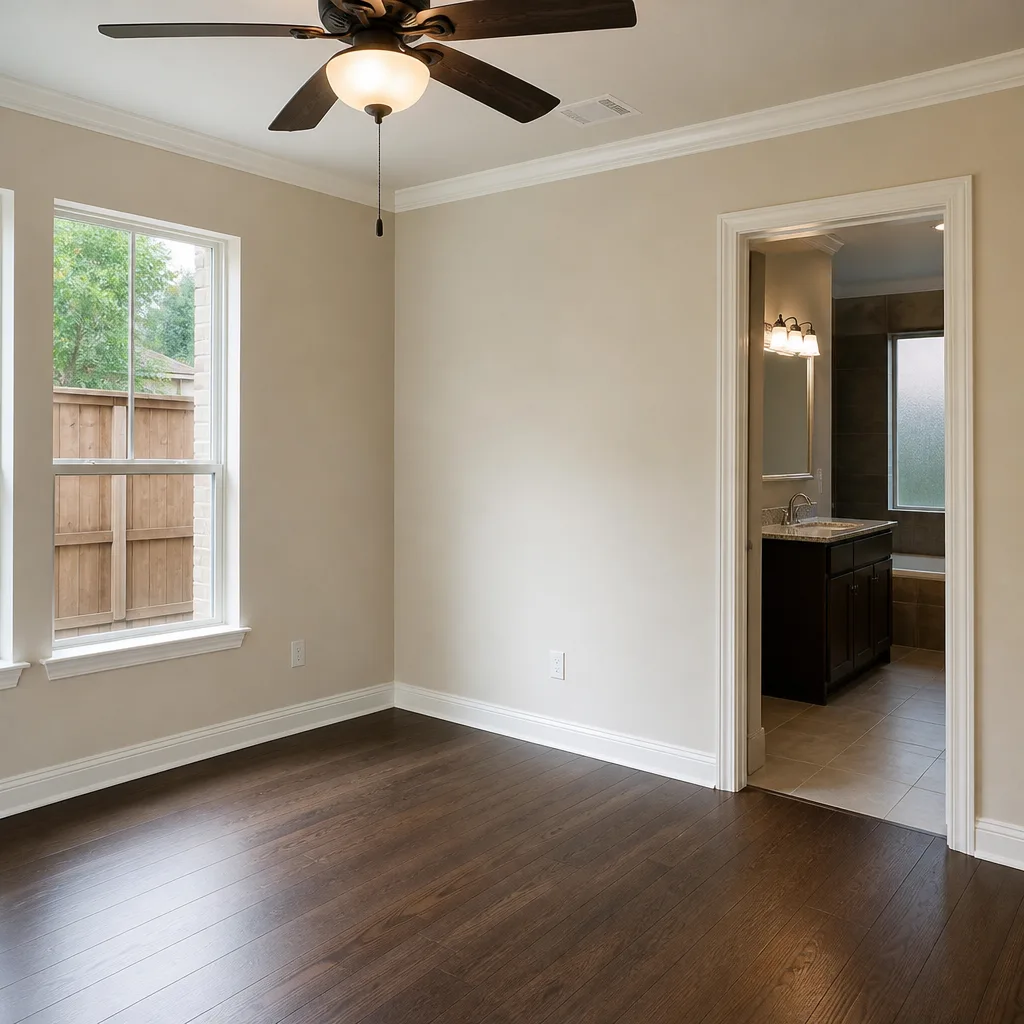 After
AfterCost Ranges: What Damage Restoration Actually Costs in Fort Worth
Every job is different, but homeowners deserve a realistic ballpark before they ever tap “call.” Here are the ranges we see across Fort Worth, from Handley to Tanglewood, based on the scope of the work:
| Service | Typical Range in Fort Worth | What Affects the Price |
|---|---|---|
| Water mitigation (drying only, no rebuild) | $2,500 – $7,500 | Class rating, square footage affected, number of days to dry |
| Full water restoration (mitigation + rebuild) | $8,000 – $35,000 | Extent of demo, flooring type, whether cabinets or counters are involved |
| Mold remediation | $1,800 – $8,000 | Square footage of growth, whether containment is needed, air sampling |
| Fire and smoke restoration | $10,000 – $50,000+ | Size of fire, smoke penetration into framing, content cleaning |
| Storm and hail damage restoration | $5,000 – $40,000 | Roof replacement vs. repair, interior water damage, insulation replacement |
These are not quotes. They are honest ranges based on hundreds of jobs in the Fort Worth market. The only way to get an exact number is for someone to assess your specific home. But these ranges are what you should expect, and if a quote comes in dramatically below them, ask what is being excluded, because something is.
Common Mistakes to Avoid
- Waiting to call because “it doesn’t look that bad.” Water travels. It moves through wall cavities, under baseboards, and into subfloor within hours. What looks like a small puddle in a Fort Worth hall bath is often a 200-square-foot moisture problem by the time someone investigates. The clock on mold starts the moment water sits, not when it becomes visible.
- Hiring a company that gives a verbal estimate. If the scope and price are not in writing before work begins, you have no contract, no leverage, and no way to compare against the final invoice. This is not a negotiation tactic. It is a baseline requirement.
- Letting the insurance company pick the contractor without question. You have the right to choose your own restoration company in most cases. The insurance-recommended contractor may be excellent or may be volume-driven. The choice should be yours, not assigned by default.
- Stopping mitigation once surfaces feel dry. This is the single most common cause of repeat mold problems we see in Fort Worth homes. Feel is not a measurement. Without clearance readings, you are guessing, and the house pays the price months later.
- Finding mold and trying to clean it without containment. Scrubbing visible mold spreads spores through the air and into the HVAC system. A small bloom becomes a whole-house problem in a weekend. Mold remediation done properly involves containment, negative air pressure, and proper disposal, not bleach and elbow grease.
- Demanding a same-day rebuild on a mitigation job. Rebuild is not an emergency. Drywall installation, flooring, and paint are scoped, scheduled, and priced in writing. Rushing the rebuild phase to “just get it done” usually results in materials installed over a structure that is not fully dry.
- Not documenting everything on day one. Photos, moisture readings, the initial scope, the water source. If a dispute with insurance comes up later, the homeowner with day-one documentation wins. The homeowner without it spends months fighting.
When to Call a Professional
Call a restoration company the moment you notice standing water, an active leak you cannot stop, a musty smell you cannot locate, or a ceiling stain that was not there yesterday. Do not wait for business hours. Water damage in Fort Worth does not keep a schedule, and neither do the companies worth hiring. A live person answers our phone 24/7, because by the time you are calling about water damage, the damage has already been progressing for hours. Homeowners who call the same day they notice the problem routinely save thousands in rebuild costs compared to those who wait a week to “see if it dries on its own.” Water Damage Repair in Fort Worth is dramatically cheaper when mitigation happens fast. Wendell Restoration Fort Worth offers free estimates in Fort Worth, call (682) 432-0584.
Frequently Asked Questions
We dispatch same-day in Fort Worth, and a live person answers the phone 24/7 to get a technician on the way quickly. The arrival time you are given is live and trackable, not a vague four-hour window. Call (682) 432-0584 and we will tell you exactly when someone will be there.
Most homeowner policies in Texas cover sudden and accidental water damage from burst pipes, appliance failures, and storm-related intrusion, but coverage varies by policy and by the water source. Gradual leaks and long-standing mold are more commonly denied. We document every job with photos and moisture readings that adjusters can review directly, and we coordinate with your claims process to make sure the evidence is in order.
Mitigation typically runs 3 to 7 days depending on the volume of water and the Fort Worth conditions involved, but the rebuild phase that follows can take several weeks. Clay soil under slabs and summer humidity both stretch drying times compared to other markets, and a responsible company will tell you that up front rather than promising a dry structure in 48 hours and leaving it wet.
If visible mold covers more than about 10 square feet, or if it is growing inside wall cavities or HVAC ducts, simple cleaning is not sufficient and can spread spores further. In Fort Worth’s humid climate, surface mold often indicates a hidden moisture source that will keep feeding the growth until the source is fixed. Proper remediation addresses both the mold and the moisture that caused it.
If the repair we complete is not done right within 365 days, we make it right, and that promise is stated in writing on every job we do. It is not a marketing line. It is the guarantee printed on the scope you sign before work starts, and it includes a free second visit if the repair fails. In our experience, homeowners who have had a bad restoration experience before are the ones who value a written guarantee most.
You can work directly with your adjuster, and we will support that process with complete documentation: initial moisture readings, daily drying logs, clearance readings, and before-and-after photos. We do not speak for the adjuster, but our documentation is built to make their review straightforward. Direct adjuster coordination is built into how we run jobs in Fort Worth, because a clearly documented loss closes faster.
The Bottom Line
Damage restoration in Fort Worth is a process with defined phases, measurable endpoints, and local conditions that shape how long it takes. The homeowners who have the best outcomes are the ones who act quickly, demand a written scope and price before work starts, understand that clearance readings are the only honest measure of “done,” and know that Fort Worth’s clay soil and summer humidity mean drying often takes longer here than in other markets. You do not need to become an expert to protect your home. For more guides & resources, visit our blog. You need to know what a legitimate job looks like so you can recognize one when you see it. And when the time comes, call (682) 432-0584. A live person answers, and the estimate is free.
Written by Blake Sorensen, Owner at Wendell Restoration Fort Worth, serving Fort Worth since 2006.