
Last updated October 16, 2026
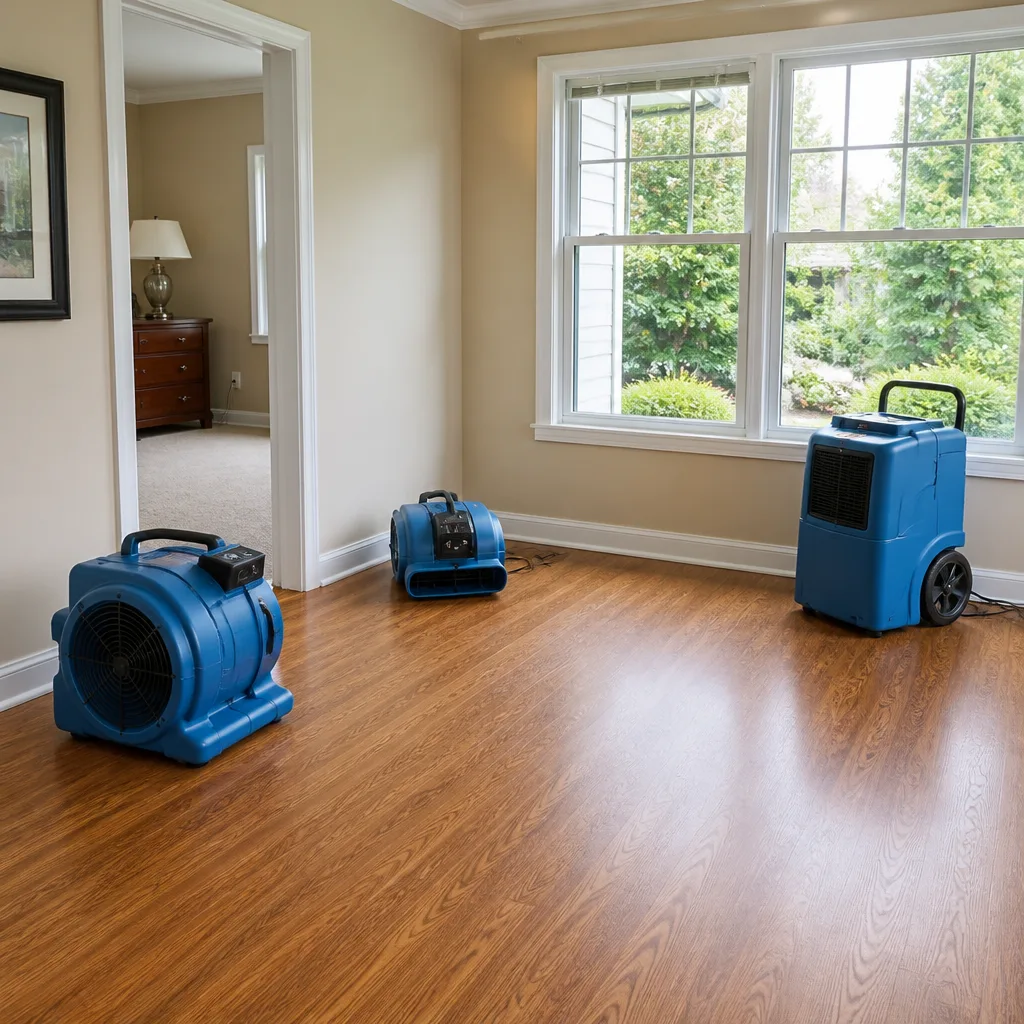 Water damage drying
 Fire & smoke cleanup
 Mold remediation
 Storm response
 Sewage cleanup
 Reconstruction
Free visual inspection and a written scope of work before any mitigation begins - photos, moisture readings, and drying logs go in your claim file
The scope we write is the scope we bill. Anything new gets shown to you, in writing, before we touch it.
Get your free estimateDamage Restoration Permits, Codes & Inspections in TX: What You Need to Know
Fort Worth home inspectors flag unpermitted post-damage repairs in roughly 1 in 5 pre-sale inspections. Let that sink in. A pipe bursts, you get it fixed, life moves on. Then three years later you’re sitting at closing and the buyer’s inspector finds that the new wall framing, the rewired outlet, or the replaced water heater never had a permit pulled. The sale stalls. Sometimes it dies. And almost every time, the problem traces back to one skipped conversation between a homeowner and their restoration contractor about who pulls the permit. This guide walks through exactly what needs a permit in Fort Worth, what your insurance actually covers, and how to avoid leaving a title problem behind when you sell. For Damage Restoration Warning Signs: A Fort Worth Homeowner’s Reference Guide, see our companion post.
Quick Answer
Most structural, electrical, HVAC, and re-roofing work done after water, fire, or storm damage requires a City of Fort Worth permit, and the contractor or homeowner must pull it before work begins. Cosmetic fixes like drywall patching, paint, trim, and flooring replacement generally don’t. Mold remediation over 25 contiguous square feet requires separate state licensing through the Texas Department of Licensing and Regulation (TDLR), not just a city permit.
Restoration work we handle
Table of Contents
- What Requires a Permit in Fort Worth After Damage
- What Does Not Require a Permit
- How Texas Insurance Code Affects Permit Costs
- The Fort Worth Permit Portal: Step by Step
- What Happens When Work Goes Unpermitted
- Mold Remediation: The TDLR Licensing Layer
- Common Mistakes to Avoid
- When to Call a Professional
- Frequently Asked Questions
What Requires a Permit in Fort Worth After Damage
The City of Fort Worth issues permits through its Development Services Department. When water or fire damage compromises any of the four systems below, a permit is required before repairs begin. Here is the practical breakdown we use when assessing a damage site:
Structural Wall Repairs
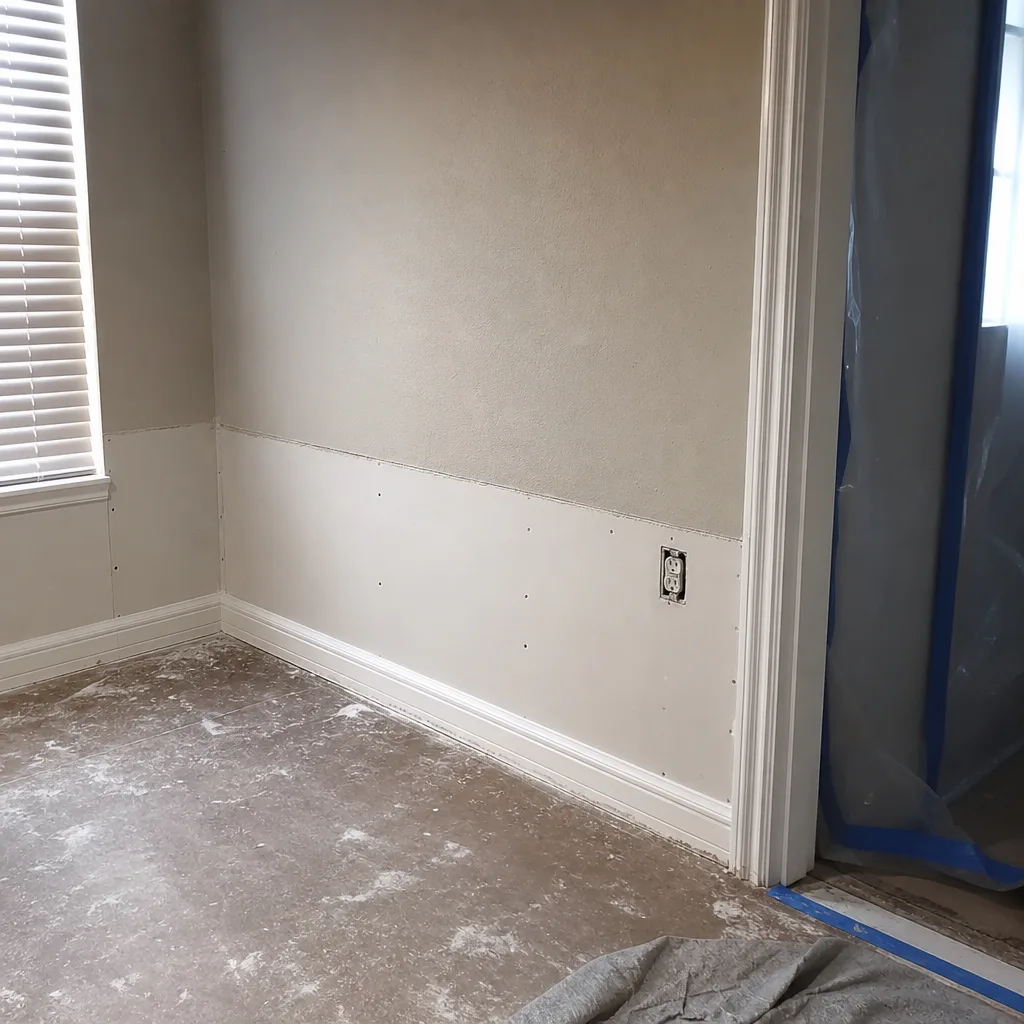
If water has wicked into wall cavities and framing has been exposed for more than a few days, you may be looking at replacing studs, sill plates, or header sections. Fort Worth requires a building permit for any work that alters or replaces structural framing. This includes cutting out and replacing load-bearing wall sections, sistering floor joists, and repairing roof trusses after a tree limb comes through. Drywall replacement over intact framing is cosmetic and does not require a permit. The moment a saw touches a stud, the permit conversation starts.
Electrical Work Exposed by Water
Water and electricity do not mix politely. When an outlet, switch, panel, or wiring run has been submerged or splashed, the National Electrical Code and Fort Worth’s adopted amendments require that affected components be evaluated and often replaced. Any new wiring, new circuits, panel replacement, or relocation of outlets requires an electrical permit. A licensed electrician typically pulls this permit, but the property owner is ultimately responsible for confirming it exists.
HVAC Replacement
A flooded HVAC closet or a fire-damaged furnace often means full equipment replacement. Fort Worth requires a mechanical permit for new furnace, air handler, condenser, or ductwork installation. This work matters for resale because home inspectors check for the permit sticker on the equipment and cross-reference it with city records.
Re-Roofing After Storm Damage
North Texas hail and wind events generate a lot of roofing work. Fort Worth requires a roofing permit for any roof replacement or repair that exceeds 100 square feet of decking replacement. The permit also triggers required inspections at specific stages: decking inspection before underlayment, and a final inspection after shingles or metal panels are installed.
If you are dealing with any of these after a water or fire event, the Water Damage Restoration in Fort Worth process should include a permit conversation before demolition starts, not after.
What Does Not Require a Permit
Knowing what does not need a permit saves money and prevents a contractor from padding a bid with phantom permitting fees. In Fort Worth, these restoration tasks fall outside the permit requirement:
- Cosmetic drywall patching and texture matching: As long as no framing is altered and no new wall is created.
- Paint, trim, and baseboard replacement: Interior finishing work that does not affect structure or systems.
- Flooring replacement: Carpet, tile, vinyl plank, and hardwood installation over the existing subfloor. If the subfloor itself must be replaced, that shifts into structural territory.
- Cabinet and countertop replacement: No plumbing alteration, no permit needed. A sink swap that reuses existing supply and drain lines is also fine.
- Insulation replacement in open wall cavities: Replacing wet batt insulation before drywall goes back on does not require a permit if the framing is untouched.
The line is consistent: if you are restoring what existed using the same materials in the same locations, you typically do not need a permit. If you are changing structure, moving systems, or replacing equipment, you do.
How Texas Insurance Code Affects Permit Costs
Here is where many Fort Worth homeowners leave real money on the table. Texas Insurance Code Section 862 requires that residential property policies include coverage for “ordinance or law” costs. This is commonly called code upgrade coverage or building ordinance coverage. What it means in plain English: if your home was built to a 1985 code and a fire or flood forces you to replace something that now must meet 2026 code, your insurer may pay the cost difference.
Example: a pipe burst in a 1990s home soaks the electrical panel. Current Fort Worth code requires arc-fault circuit interrupters and a larger service than the original panel provided. The new panel costs $2,800 versus $1,200 for a like-kind replacement. Code upgrade coverage can pay that $1,600 gap. But it never gets used because many restoration contractors handle the repair without mentioning the code discrepancy to the adjuster, and the homeowner never asks. Our DIY vs Professional Damage Restoration: The Fort Worth Homeowner’s Decision Guide explains how to spot this gap early.
Ask the adjuster two questions: “Does my policy include ordinance or law coverage?” and “What documentation do you need for the code upgrade portion of this repair?” The answer determines whether permit-driven upgrades cost you hundreds or cost you nothing. We have seen this single conversation change final out-of-pocket costs by thousands of dollars on Fort Worth fire and water claims. For structural repairs after water damage, the Water Damage Repair in Fort Worth scope should include a line item for permit and code compliance costs so the adjuster can approve it in writing.
The Fort Worth Permit Portal: Step by Step
Fort Worth moved permit applications online through the Development Services Department’s Accela Citizen Access portal. Here is the process, including the timelines we work with regularly:
- Create an account on the Fort Worth Accela portal. The homeowner or the contractor can create the account. If the contractor pulls the permit, the homeowner should still create a login so they can track status independently.
- Select the permit type: residential building, electrical, mechanical, or roofing. The portal will ask for the property legal description, which is on your tax statement or appraisal district record.
- Upload required documents: For structural work, this typically means a scope of work letter, photos of the damage, and sometimes a structural engineer’s letter if load-bearing elements are involved. For roofing, the shingle type and manufacturer specs are required.
- Pay the permit fee: Fees are calculated by valuation. A typical residential repair permit in Fort Worth runs $95 to $450 depending on scope. Electrical and mechanical permits are usually flat-fee, between $60 and $150.
- Receive the permit and post it: The approved permit must be printed and posted at the job site, visible from the street where practical.
- Schedule inspections: Fort Worth schedules inspections through the same Accela portal. Current turnaround is typically 24 to 48 hours for a scheduled inspection slot, with the inspector arriving during a window that your contractor should confirm the morning of.
- Close the permit: After the final inspection passes, the permit is marked complete in city records. Keep a copy of the closed permit with your home documents. You will want it at resale.
Expect the full cycle for a medium water damage repair, from application to closed permit, to run 10 to 14 business days. Reconstruction-level work takes longer. A contractor who tells you permits are not needed for structural work is either wrong or trying to work around the system.
What Happens When Work Goes Unpermitted
In Fort Worth, unpermitted structural repairs become a problem at the moment you least want one: when you are trying to sell. Here are the real consequences we have seen play out in Fort Worth neighborhoods from Ridglea to Ryan Place to Summer Creek:
Title and Escrow Problems
Texas seller’s disclosure forms now ask directly whether any work requiring a permit was completed without one. Answer truthfully or not, the buyer’s inspector will often find the work anyway. Unpermitted repairs that are discovered during escrow can trigger a demand for back-permitting, which means opening walls for inspection, paying penalty fees, and delaying closing by weeks.
Code Enforcement Risk
Fort Worth’s Code Compliance Division has the authority to cite a property for unpermitted construction work. A neighbor complaint during the active repair phase is the most common trigger. Fines start small but citations remain attached to the property record.
Insurance and Liability Exposure
If a future claim traces its cause back to unpermitted work, an insurer may deny the claim. Fire originating at an unpermitted electrical junction box or mold from an improper structural repair are not theoretical examples. Insurers look for reasons when the claim is large.
No one intends to create a title problem. The mistake is assuming the contractor is handling the permit. Confirm it. In writing. Before demolition starts.
Mold Remediation: The TDLR Licensing Layer
Mold in Texas operates under a different regulatory umbrella than general restoration. The Texas Department of Licensing and Regulation (TDLR) licenses mold assessment and remediation under the Texas Mold Assessment and Remediation Rules, which took effect in 2005. The threshold that matters: any visible mold growth covering more than 25 contiguous square feet triggers the full licensing requirement. Under 25 square feet, a homeowner can handle it as a cleaning issue.
Here is what the TDLR rules require for a legal mold remediation project:
- A licensed Mold Remediation Contractor must oversee the work. License number must appear in the written contract.
- A written work plan must be provided before containment is set up.
- Notification to TDLR is required for remediation projects over 25 contiguous square feet, filed before work begins.
- Clearance testing by an independent Mold Assessment Consultant is required after remediation, and that consultant cannot work for the remediation company.
This licensing layer catches many restoration companies in Fort Worth. They offer mold work as an add-on service without holding a TDLR Mold Remediation Contractor license, or they skip the required notification because the homeowner does not know to ask. The consequence: a remediation that fails clearance testing or gets flagged during a later sale can force a second, more expensive remediation plus testing cycle. For mold-specific work, Mold Remediation in Fort Worth should include the TDLR compliance conversation before pricing is finalized. If a contractor cannot show you a TDLR license number when you ask, find another contractor.
Common Mistakes to Avoid
- Assuming the contractor pulled the permit. Fort Worth holds the property owner responsible for permit compliance. Ask for the permit number before work starts and verify it in the Accela portal yourself.
- Signing a contract that says “permits included if required” without a permit line item. If the permit is not itemized with a fee, there is no way to confirm it was pulled. Get the permit number written into the scope of work.
- Letting the insurance adjuster deduct permit costs because the contractor “handles that.” Permit fees are a covered line item on most policies. If the estimate does not include them, the adjuster may not add them later without a supplement request.
- Ignoring code upgrade coverage. Texas Insurance Code Section 862 puts ordinance or law coverage in most residential policies. It is worthless unless someone asks for it during the claim.
- Treating mold over 25 square feet as a cleaning job. TDLR licensing thresholds are not optional. An unlicensed mold job can fail a resale inspection years later.
- Closing the permit before the final inspection. Some contractors pull the permit and then skip the inspection because it adds a day to the schedule. An open permit hangs on the property record and creates its own title headache at sale.
- Throwing away the closed permit paperwork. When you sell, the buyer’s title company and inspector will check for this. Keep the closed permit document with your closing papers.
When to Call a Professional
If structural framing has been exposed to water, if an electrical panel has been flooded, if a furnace needs full replacement, or if mold covers more than 25 square feet, this is not the time for a handyman with a pickup truck. The permit conversation, the insurance documentation, and the code compliance details all compound quickly. You need a restoration company that puts the permit question on the table before demolition begins, documents everything for your adjuster, and leaves you with closed permits on file. Wendell Restoration Fort Worth offers free estimates in Fort Worth, including a written price before any work starts. Call (682) 432-0584 to have someone walk the damage with you and lay out the permit path in plain language.
Frequently Asked Questions
No, drywall replacement over intact framing is considered cosmetic work and does not require a City of Fort Worth permit. If the water damage extends into structural framing, studs, or sill plates, a building permit is required before those elements are replaced.
Either party can pull the permit in Fort Worth, but the property owner is legally responsible for ensuring the permit exists and the work passes inspection. We recommend you ask the contractor for the permit number before work begins and verify it in the Accela portal. Our team at Wendell Restoration Fort Worth includes the permit number in the written scope so there is no guesswork.
Yes, in most cases. Permit fees are a standard covered line item on residential property policies, and Texas Insurance Code Section 862 adds ordinance or law coverage that can pay for code-required upgrades. Ask your adjuster to confirm both coverages apply to your claim. If your restoration contractor does not mention permit costs to the adjuster, ask them to add a supplement request.
Texas seller’s disclosure forms require you to disclose unpermitted work that required a permit. Buyers’ inspectors find unpermitted repairs frequently in Fort Worth, and the result is often a repair demand, a price concession, or a deal that dies in escrow. Back-permitting after the fact is more expensive than the original permit would have been. Call (682) 432-0584 if you need help figuring out whether past repairs have a permit problem.
Yes. Texas requires a TDLR-licensed Mold Remediation Contractor for any mold remediation over 25 contiguous square feet, plus a written work plan and TDLR notification before work starts. Under 25 square feet, it is treated as routine cleaning. Ask any mold contractor for their TDLR license number before signing anything.
A straightforward water damage repair permit in Fort Worth typically takes 10 to 14 business days from application to final inspection, including the 24 to 48 hour inspection scheduling window. Roofing and structural permits run longer. Emergency stabilization work can sometimes begin before the permit is issued if you document the hazard, but full repairs should not proceed until the permit is approved. For an exact timeline on your specific damage, call (682) 432-0584 and we will walk you through it.
The Bottom Line
Permits are the least exciting part of damage restoration and the most expensive to ignore. In Fort Worth, structural, electrical, HVAC, and roofing repairs after water or fire damage require permits, and the homeowner, not the contractor, carries the legal weight. Texas insurance covers permit fees and code upgrades if you know to ask. TDLR licensing governs mold work over 25 square feet and is the most commonly skipped requirement in the industry. Keep closed permits with your home documents. Ask for the permit number before work starts. And if the contractor avoids the permit conversation, that is your sign to find one who does not. For Fort Worth homeowners, Wendell Restoration Fort Worth home is just a call away at (682) 432-0584.
Written by Blake Sorensen, Owner at Wendell Restoration Fort Worth, serving Fort Worth since 2006. Browse more guides & resources on damage restoration and home protection.
See the difference
 Before
 After
After Before
 After
After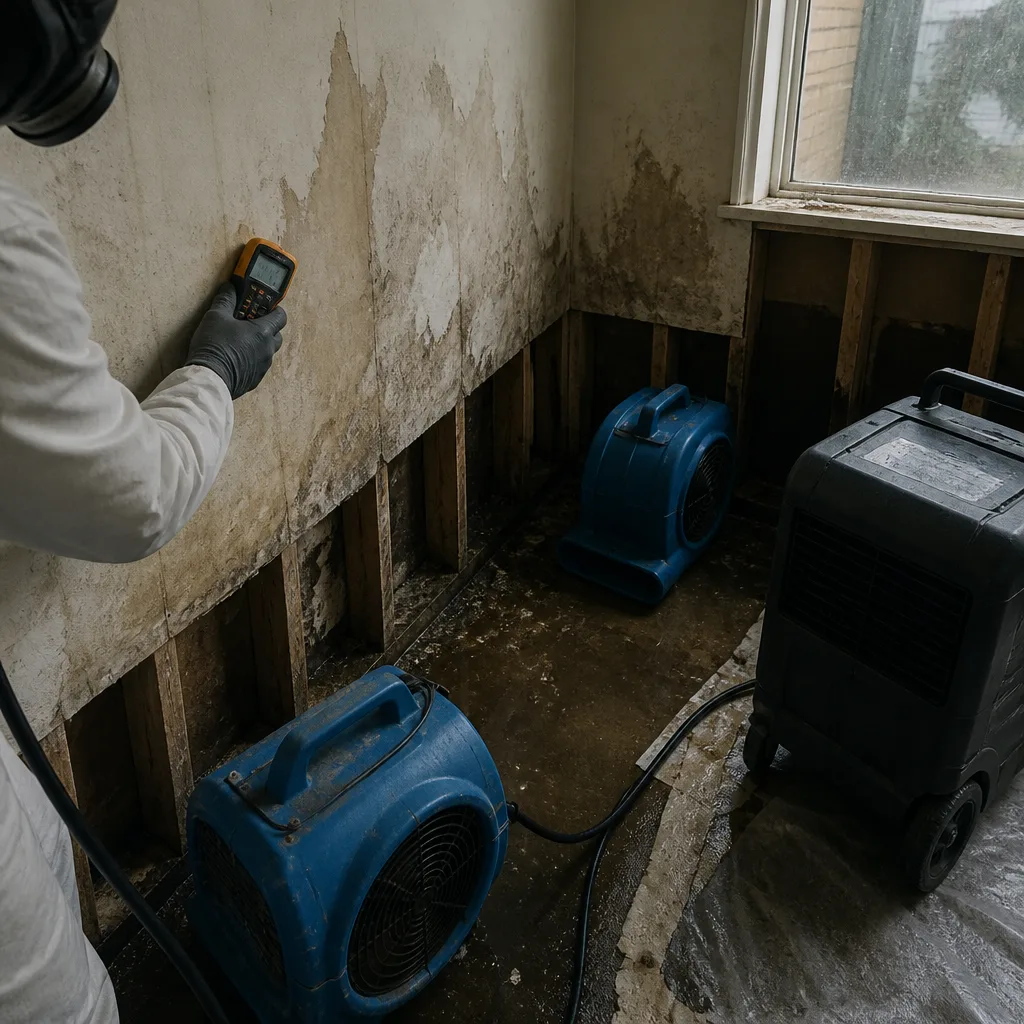 Before
 After
After